
Aluminum Rod CCR Line
Aluminum Continuous Casting and Rolling Line
(7+8 Rolling Stands)
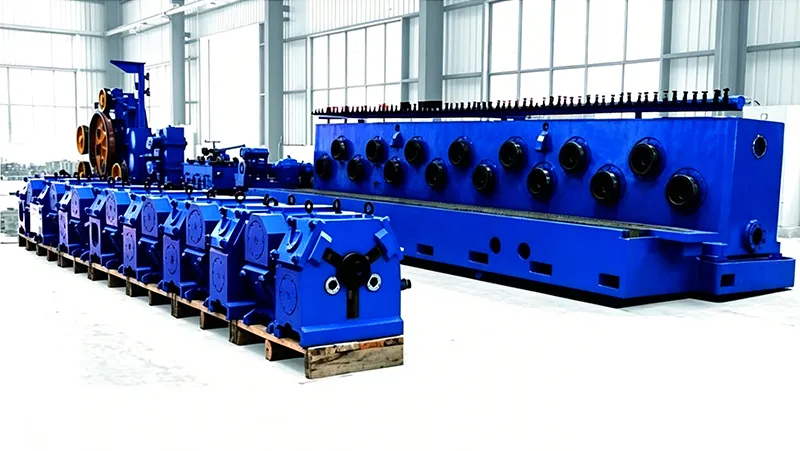
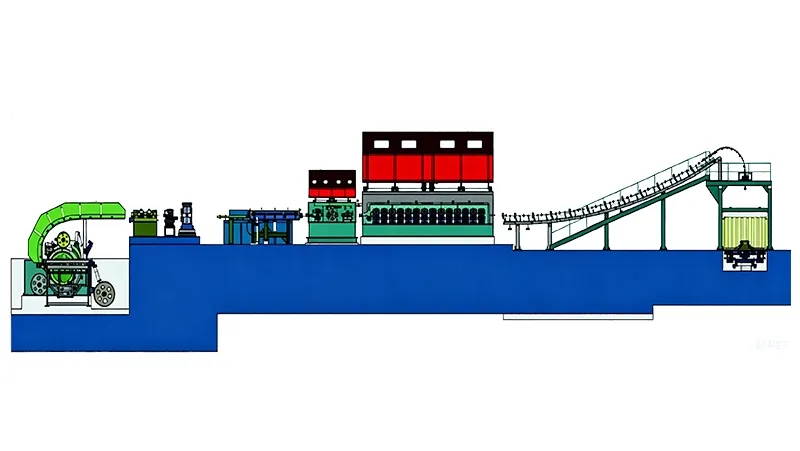
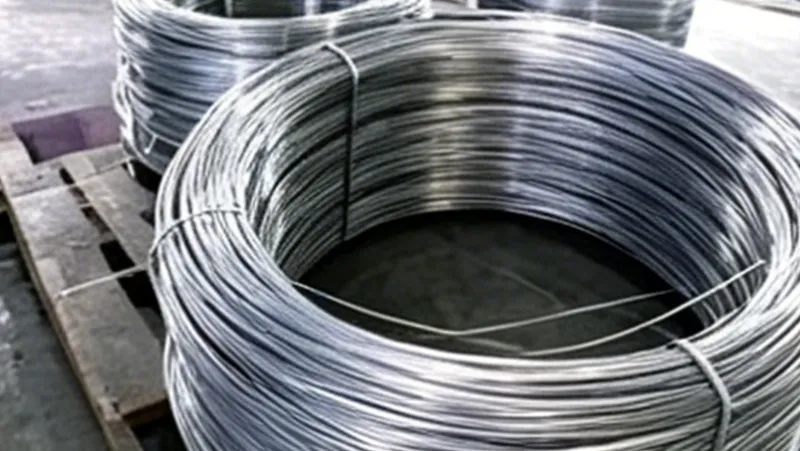
Aluminum rod continuous casting and rolling machines produce Ø9.5 mm, Ø12 mm, and Ø15 mm electrical aluminum rods in one connected production flow. During the continuous casting and rolling process, molten aluminum is cast into aluminum cast bars and sent to the rolling mill while still hot, where the rolling section reduces it into finished rod. The finished rods are used as conductor materials for wire and cable manufacturing, photovoltaic cables, and power grid applications.
Technical Specifications
Finished Rod Specifications
| Finished Rod Diameter | Number of Rolling Stands | Output | Final Rolling Speed |
| Ø9.5 mm | 15 | 7.5 t/h | 10–12 m/s |
| Ø12 mm | 13 | 6.5 t/h | 8–10 m/s |
| Ø15 mm | 11 | 5 t/h | 6–8 m/s |
| Model | Casting Cross-Section (mm²) | Rod Diameter (mm) | Max. Final Rolling Speed (m/s) | Max. Output (t/h) | Number of Rolling Stands |
| XDG1800+255/15P | 2450 | Ø9.5, Ø12, Ø15 | 12 | 7.5 | 15 (7+8) |
Machine Configuration
Standard Configuration
- Casting Machine
- Hydraulic Shear
- Continuous Rolling Mill
- Rod Take-Up System
- Gearbox Lubrication System
- Emulsion Cooling System
- Electrical Control System
Optional Equipment
- Aluminum Melting Furnace
- Holding Furnace
- Front Traction Positioning Machine
- Rotary Shear
- Straightening Machine
- Rolling Rolls (made of H13 steel)
- Dual-Reel Take-Up System
Production Process Flow
- Aluminum ingots / electrolytic aluminum
- melting furnace
- refining, degassing, and filtration
- holding furnace
- four-wheel continuous casting machine
- traction and billet cutting
- induction heating (optional)
- multi-stand continuous rolling mill
- inline quenching
- oil-free rod guide
- rosette dual-reel take-up
- finished aluminum rod
Features
- The hot cast bar moves straight into the rolling mill, so the rod can be formed without a separate reheating step. This reduces energy use, saves workshop space, and makes operation easier.
- The four-wheel casting machine has a compact structure that helps with installation, alignment, adjustment, and daily maintenance.
- Stable molten aluminum feeding helps reduce turbulence before casting, which supports smoother cast bar formation.
- The H-type crystallizing wheel uses zoned cooling on the inner, outer, and side sections. Adjustable spray cooling helps control the cooling intensity and supports more uniform solidification.
- The Y-type three-roll rolling mill uses upper and lower drive for stable transmission, smooth rolling, and easier maintenance.
- The oil-free rod take-up system reduces oil use and helps lower operating costs. The vertical rod-laying design guides the finished rod into the rod basket for easier take-up and handling.
- Digital DC speed control, PLC control, measurement, fault display, and HMI monitoring help operators check running status and manage production more easily.
- For overseas projects, our aluminum rod CCR machines can be supplied according to CE and ISO requirements.
Deyang XDG is dedicated to the design and manufacture of cable and wire machinery, from metal rod continuous casting and rolling to wire drawing, stranding, cabling and extrusion. Beyond supplying wire and cable production equipment, we specialize in providing complete solutions to help global wire and cable manufacturers improve production efficiency and reliability. Our equipment including CCR lines, wire drawing machines, stranding machines, cabling machines as well as auxiliary equipment such as take-up units and cable packing machine is widely utilized in the production of power transmission cables, electrical conductors, communication cables, photovoltaic cables, and more.